Closures and consolidations
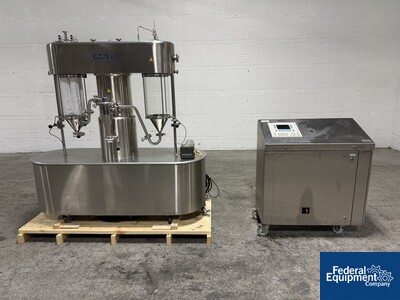
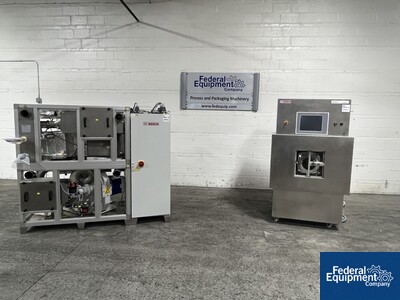
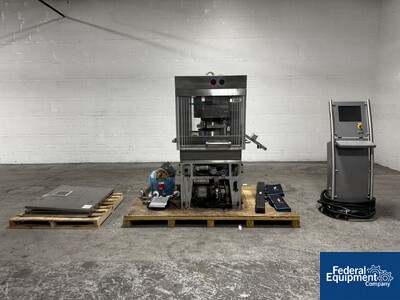
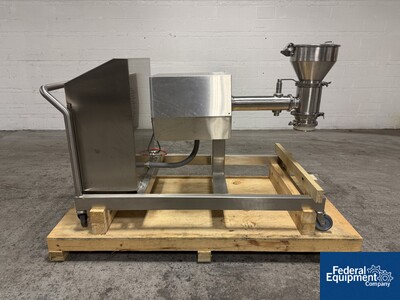
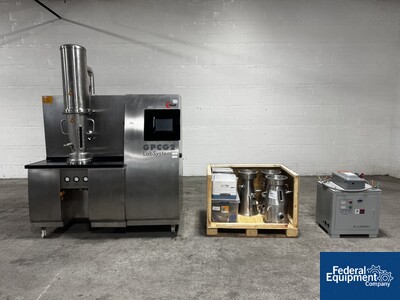
Most of it comes from plants that consolidate, close, or move a product to another site, and our auctions have included 503B outsourcing facilities, an IV bag operation, and vaccine and injectable packaging lines.
Aseptic Processing
Federal Equipment Company buys and sells used aseptic processing equipment for injectable, ophthalmic, and other sterile drug products from more than 1 million sq ft of storage space in Cleveland, OH, including more than 200,000 sq ft of climate-controlled space for pharmaceutical equipment. We have handled the whole sterile train: WFI stills, vial and stopper washers, depyrogenation tunnels, steam sterilizers, fill-finish lines under isolators or RABS, freeze dryers, crimp cappers, and inspection machines.

What this covers
Aseptic processing fills a sterile product into sterile containers inside a sterile zone, because the product would not survive sterilization in its final container. Terminal sterilization, where filled containers go through a steam sterilizer afterward, uses much of the same equipment. We handle equipment for both, for injectables in vials, syringes, cartridges, ampoules, and IV bags, and for sterile eye drops and blow-fill-seal products.
The train starts once a drug substance is ready to formulate. Cell culture, fermentation, and purification come before it, so bioreactors, chromatography, and tangential flow filtration belong on our biotechnology equipment page. Syrups, suspensions, and other liquids filled without a sterility requirement run on liquid dosage equipment, and creams and ointments run on semi-solid dosage equipment.
Food and beverage plants use the same phrase for UHT dairy, juice, and shelf-stable food packaging. That is food equipment, and it reaches us only occasionally, as a retort sterilizer or a lab-scale UHT unit. It belongs on our food and beverage equipment page, and the rest of a drug plant starts at used pharmaceutical equipment.
Manufacturers include Bosch, IMA, Bausch+Ströbel, Groninger, Cozzoli, and Stokes. We have bought and sold used process and packaging equipment since 1957. We also buy surplus sterile lines outright or on consignment.
This equipment reaches us from three directions.
Most of it comes from plants that consolidate, close, or move a product to another site, and our auctions have included 503B outsourcing facilities, an IV bag operation, and vaccine and injectable packaging lines.
Contract manufacturers sell surplus too, and CDMO sales appear regularly in our auction archive.
Some lines were built, factory tested, and never installed, or installed and never run.
Process train
The product passes through seven steps on its way to a sealed container, and each step has its own equipment. Plants often buy them as separate machines, though a fill-finish line joins steps 3, 4, and 6 on one conveyor.
Sterile manufacturing runs on water for injection (WFI) and pure steam. Multiple-effect and vapor compression stills make the WFI, and pure steam generators feed sterilizers and steam-in-place systems. We list stills and steam generators from Finn Aqua, MECO, and Mueller alongside our steam sterilizers, and purified water systems under water treatment and purification. CIP systems and HEPA air handling equipment complete the utilities.
The product is mixed in jacketed stainless steel tanks, then pushed through a sterilizing-grade filter into a sterile holding vessel or straight to the filler. Each filter is integrity tested before and after use. We see the stainless steel filter housings and integrity testers this step needs from Millipore, Pall, and Sartorius, including Sartorius Sartocheck testers.
Glass vials are washed, then passed through a depyrogenation tunnel or oven, where dry heat destroys endotoxin on the glass. Stoppers go through a stopper washer, and stoppers, filling parts, and tools are sterilized in a steam sterilizer. Our washers category holds Cozzoli, Huber, and Lytzen Schubert vial and stopper washers. Tunnels usually arrive as part of a complete line, and GMP steam sterilizers sit under sterilizers.
This is the step the rest of the train exists to protect. A fill-finish line doses the product and seats the stopper in a Grade A zone, behind a restricted access barrier system (RABS) or inside a sealed isolator. We have handled lines for vials, syringes, cartridges, ampoules, IV bags, and eye drop bottles, along with aseptic powder fillers and gloveless robotic workcells for nested containers. Blow-fill-seal machines form, fill, and seal a plastic container in one cycle, and Rommelag is the name we see most often there.
A product that is unstable in solution is freeze dried in its vial. Vials leave the filler with stoppers partly seated, the freeze dryer removes the water under vacuum, and the shelves press the stoppers home before the chamber opens. The freeze dryers we have handled run from 1.24 sq ft lab units to 430 sq ft production dryers, so pilot and commercial scale are both represented.
After stoppering, or after the freeze dryer, an aluminum seal is crimped over each stopper to hold it in place. West Co Westcapper rotary cappers, Genesis vial crimpers, and IMA Life ALU cappers are the machines we see most, listed with our cappers. Blow-fill-seal containers skip this step, because they are sealed as they are formed.
Every filled unit is inspected for particles, cracks, and fill level before release. That work runs from manual inspection booths through semi-automatic units to automated machines from Seidenader, Eisai, and Bosch. Our inspection equipment also covers container closure integrity, with Wilco leak detectors and headspace gas analyzers and Nikka Densok pinhole detectors. Labeling, cartoning, and serialization follow on packaging equipment.
Utilities and preparation
Component preparation
Filling and barrier systems
Freeze drying, capping, and inspection
Terminology
Few kinds of process equipment carry as many overlapping names, and a listing may use any of them. Four distinctions clear up most of the confusion.
An isolator is a sealed enclosure, decontaminated with vaporized hydrogen peroxide and worked through glove ports or, in gloveless designs, by robots. A RABS is a rigid barrier with glove ports around a filler, either open or closed to the room, and it sits inside a cleanroom instead of replacing one. Listings use glove box, barrier isolator, and isolator loosely for the same units.
The difference that matters is the job a unit was built for. Isolators for sterile filling usually run at positive pressure to keep contamination out, and containment isolators run negative to keep a potent compound in. Aseptic containment isolators for sterile potent products run negative and still protect sterility, so pressure alone does not settle it. Check what each unit was designed and documented to do.
A depyrogenation tunnel, which listings also call a sterilizing tunnel or tunnel sterilizer, does the same dry heat job as a depyrogenation oven. The tunnel runs continuously on a vial line, and the oven runs batches. A steam sterilizer, also called an autoclave, uses moist heat on stoppers, parts, and tools that a tunnel would damage. Our GMP steam sterilizers sit under sterilizers, and larger industrial units sit under autoclaves.
A freeze dryer and a lyophilizer are the same machine. Listings give size as shelf area, in square feet or square meters depending on the builder, so an IMA Life Lyomax 40 appears as both 40 sq m and 430 sq ft. VirTis, Hull, and FTS Systems dryers can also appear in listings under SP Scientific, so search all four names.
A fill-finish line is the full run from washer to capper. A monoblock combines filling, stoppering, and capping on one compact base, and a standalone filler doses product with the stoppering and capping sourced around it. Lines built for ready-to-use nested vials and syringes replace the washer and tunnel with a station that removes the bag and lid from each tub.
Manufacturers
These are the manufacturers we see most often in this part of a drug plant. They are grouped by the part of the train they serve.
Bosch vial lines come through most often, with RRN washers, HQL tunnels, FSM fillers, and AFG aseptic powder fillers, some of them listed under the TL Systems name. Bausch+Ströbel covers ampoule, syringe, cartridge, and vial filling. IMA Life lines pair Hydra washers and Blue Galaxy tunnels with Sterifill and F2000 fillers, and Groninger builds vial, syringe, and eye drop lines.
Cozzoli appears at almost every step, from GW24 batch vial and ampoule washers and SW40 stopper washers to syringe, ampoule, and vial fillers. M&O Perry syringe and vial fillers, Watson-Marlow Flexicon peristaltic fillers, and Cytiva Vanrx gloveless workcells are the other fillers we see repeatedly.
Isolators come most often from La Calhene, Skan, Howorth, CPS, and Telstar. Bioquell and STERIS hydrogen peroxide vapor generators handle the decontamination.
Steam sterilizers come mainly from Fedegari, Getinge, STERIS, and Primus. WFI stills and pure steam generators come from Finn Aqua, MECO, and Mueller, whose stills carry the Pyropure name.
Stokes production dryers, VirTis Genesis and Advantage units, BOC Edwards Lyoflex and Lyomax dryers, and IMA Life Lyomax dryers are the most common. SP Scientific LyoConstellation, Hull, Millrock Revo, FTS Systems LyoStar, and Telstar Lyobeta units come through as well.
West Co Westcapper crimpers and Genesis vial crimpers lead on capping. Inspection comes from Seidenader V90 and MS-60 machines, Eisai EIS-series units, and Wilco leak and headspace testers sold under the Wilcomat name.
Brand pages
All manufacturers



Parts and services
Three parts of Federal Equipment Company do work that buyers of used fill-finish equipment tend to need.
Parts
PharmParts is our parts division, and its lyophilizer parts collection covers IMA freeze dryers. It carries capacitance manometers, pressure transmitters and transducers, circuit breakers, and rupture disks, along with a clean-in-place pump. The manometers, transmitters, and rupture disks are the parts that read and protect a dryer's chamber, and they are worth checking on any used unit.
Decontamination
Penicillin and cephalosporin injectable plants do sell equipment, but we do our best never to bring anything that ran a beta-lactam into our warehouse. Where a buyer wants proof, our decontamination service swabs product-contact surfaces and tests them for penicillin G and ampicillin, with a written report. It can also reduce bioburden with a dry vapor fog of peracetic acid and hydrogen peroxide.
Online show
Virtual Pharma Expo, our free online trade show, runs an aseptic fill/finish edition every year, with live presentations and Q&A from equipment experts. Past editions are free to watch on demand. Its show specials drew on the same fill-finish lines and inspection machines described here.
Buying used
A used machine for sterile work is judged on more than its mechanical condition. Four things deserve attention before you commit.
Sterile drug products answer to 21 CFR Part 211, the FDA's October 2004 guidance on sterile drug products produced by aseptic processing, and, for European markets, EU GMP Annex 1, fully applicable since August 25, 2024. Those documents shape what a buyer expects of a barrier system, a filler, or a freeze dryer. We pass along the records and machine history we hold, and validating the equipment for your process stays with you.
Where our listings state a grade for product-contact steel on this equipment, it is usually 316 or 316L stainless steel. A filler is set up for one container and closure size, so its change parts decide what it can run. Several lines we have handled came with change parts for multiple vial sizes and for both 13 mm and 20 mm closures.
About a third of the fill-finish lines and fillers we have handled were listed as unused, against about 3% across our inventory as a whole. Some arrived still in their shipping crates. Those units save the most time against a new line, which is built to order.
Most of this equipment can be inspected in Cleveland, OH, and complete lines are often shown where they stand at the seller's site. Customers often send an OEM representative to inspect, and we run equipment under power wherever we can. Live video tours are available when travel is not practical.
Selling surplus
Fill-finish lines, isolators, and freeze dryers come to market when a plant consolidates, a product moves to another site, or a project changes course. We buy outright when a seller wants a fixed price and date, and we sell on consignment when a seller can wait for the right buyer.
Send an asset list with nameplate photos, and we will tell you what the equipment is worth and how it is likely to sell: as a complete line, as separate machines, or at auction.
Send the asset list and nameplate photos to sales@fedequip.com, or call 800-652-2466.
Sell your equipmentBuying instead? Tell us what you are looking for, including the container, fill range, and speed.
FAQ
Still have a question? Call 800-652-2466 or email sales@fedequip.com.
An isolator is a sealed enclosure with its own filtered air supply. It is decontaminated with vaporized hydrogen peroxide, and operators work through glove ports, or robots do the work in gloveless designs. A RABS is a rigid barrier with glove ports around the filling zone, open or closed to the room, and it relies on the surrounding cleanroom as well. Both protect the same step, so the choice often depends on the cleanroom a plant already has.
A typical vial line runs a washer, a depyrogenation tunnel, a filling and stoppering machine under RABS or an isolator, and a crimp capper, joined by conveyors and tray loaders. A freeze dryer sits between stoppering and capping when the product is lyophilized. Lines for ready-to-use nested vials and syringes replace the washer and tunnel with a de-bagging and de-lidding station. Inspection follows, then labeling and packaging.
Yes. Complete lines reach us from plant consolidations, product transfers, and projects that changed course, and some were factory tested and never installed. A line is often sold and inspected where it stands, which keeps its conveyors, change parts, and controls together. Tell us the container, fill range, and speed you need, and we will look for a line that matches.
Yes. Compounding isolators and glove boxes, small syringe and vial fillers, steam sterilizers, and inspection booths all suit 503B and pharmacy compounding work. Our auctions have included two 503B compounding facilities and a 503B operation filling sterile IV bags, and Telstar compounding isolators are among the units we have listed. Tell us your batch size and container, and we will look for equipment that fits.
The fill-finish steps are the same, but biologics shift the priorities. Many are freeze dried, many are filled in small batches into nested vials or syringes, and gentle peristaltic filling is common for proteins. Gloveless robotic workcells from Cytiva's Vanrx line fill nested vials, syringes, and cartridges. Bioreactors, chromatography, and purification come earlier, and they are covered on our biotechnology equipment page.
Filled injectables get 100% visual inspection for particles, cracks, and fill level, on manual booths, semi-automatic units, or automated machines. Container closure integrity is checked separately, with vacuum or pressure decay leak testers, pinhole detectors, or headspace gas analyzers. We have handled inspection machines from Seidenader, Eisai, and Bosch, leak detectors and headspace analyzers from Wilco, and pinhole detectors from Nikka Densok.
Yes, as complete lines or as separate machines, outright or on consignment. Fill-finish lines, isolators, freeze dryers, vial washers, and WFI systems are all of interest, including unused equipment from a project that changed course. Send an asset list with nameplate photos, and we will tell you what it is worth and how it is likely to sell.
Call 800-652-2466 or email sales@fedequip.com. Inspections in Cleveland, OH by appointment.
Chemical Gear: Stainless Steel Vessels, Reactors & Process Equipment
October 30 - November 5, 2026

Former Assets of a 1,000,000 Sq. Ft. Leading Tire Manufacturer
November 24 - December 3, 2026


Denison Pharmaceuticals Turnkey Sale
Turnkey Contract Pharmaceutical Operation Available Immediately. Manufacturing OTC Sprays, Liquids, Creams, Aerosols, Gels, Inhalers & More!

Large-Capacity Jacketed 304 Stainless Steel Storage Tanks
Multiple matching tanks available. Jacketed configurations for temperature control. Specs listed per unit.

Solid Dosage Packaging & End-of-Line Equipment
A broad selection of solid dosage packaging, inspection, and end-of-line equipment from a single site.


Chemical Gear: Stainless Steel Vessels, Reactors & Process Equipment
October 30 - November 5, 2026
Former Assets of a 1,000,000 Sq. Ft. Leading Tire Manufacturer
November 24 - December 3, 2026
Denison Pharmaceuticals Turnkey Sale
Turnkey Contract Pharmaceutical Operation Available Immediately. Manufacturing OTC Sprays, Liquids, Creams, Aerosols, Gels, Inhalers & More!
Large-Capacity Jacketed 304 Stainless Steel Storage Tanks
Multiple matching tanks available. Jacketed configurations for temperature control. Specs listed per unit.
Solid Dosage Packaging & End-of-Line Equipment
A broad selection of solid dosage packaging, inspection, and end-of-line equipment from a single site.


Federal Equipment Company sends out emails with equipment and information curated for our Pharmaceutical, Chemical, Plastics, Packaging, and Food & Beverage customers each week. If you want to sign up to receive any or all of these emails, click the button here.