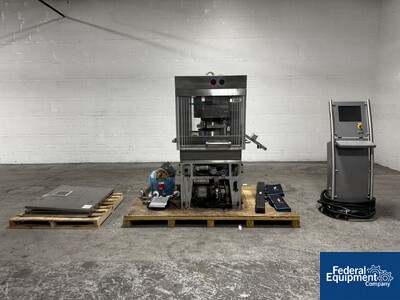
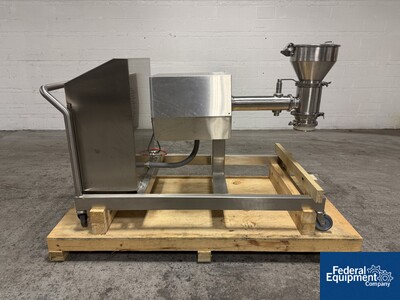
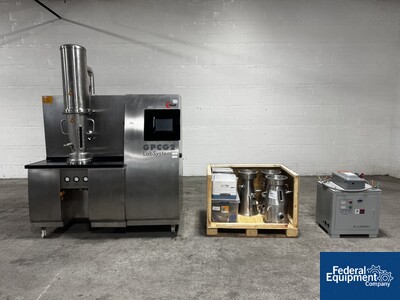
What equipment is used in oral solid dose manufacturing?
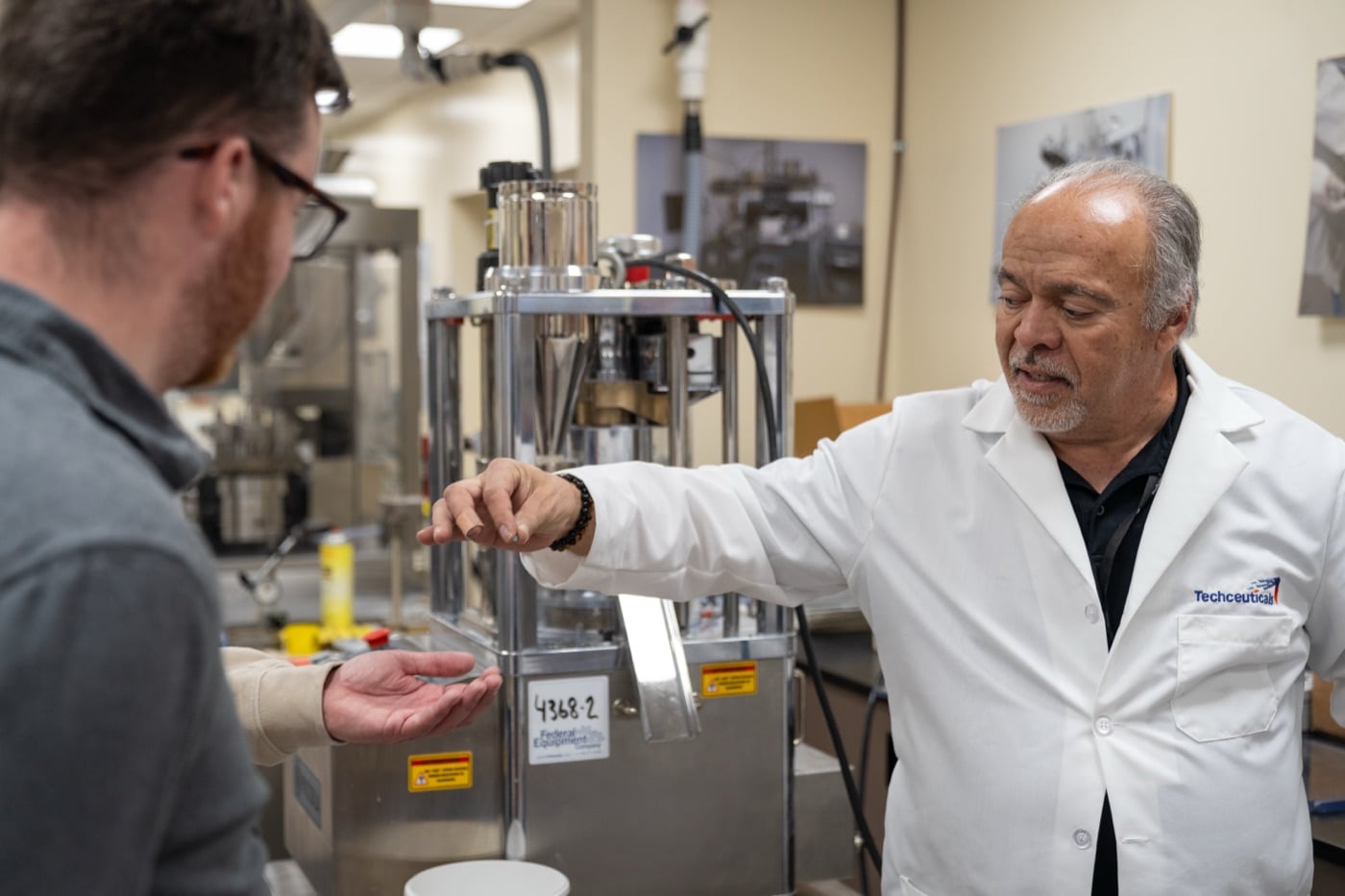
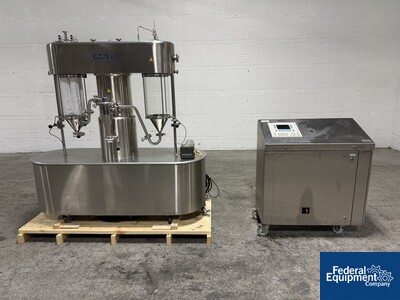
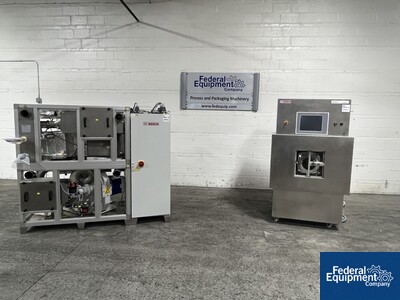
A typical oral solid dose line runs dispensing, blending, granulation, drying, milling, final blending, compression or encapsulation, coating, inspection, and packaging. Direct compression skips granulation, drying, and milling, and dry granulation skips the drying step. Each step has its own equipment, from bag dump stations and bin blenders at the start to tablet counters and blister machines at the end. Hardness and friability testers sit beside the press for in-process checks, while dissolution and assay testing happen in the QC lab.
What is the difference between wet granulation, dry granulation, and direct compression?
Wet granulation binds the powder with a liquid in a high shear granulator or fluid bed, then dries and mills it. It suits most blends that flow or compress poorly. Dry granulation compacts the blend on a roller compactor and mills the ribbon, which avoids moisture and heat. Direct compression skips both steps and presses the blend as it is, which needs excipients that flow and compress well on their own.
Can used solid dose equipment run potent compounds?
It can, if the machine was built or fitted for containment. Wash-in-place presses, capsule fillers and granulators built into isolators, and contained mills all come through our inventory, and the configuration matters more than the brand. Ask for the product history before you buy, and plan cleaning or decontamination around it. As a policy, we do our best never to bring beta-lactam equipment, anything that ran penicillin or cephalosporins, into our warehouses.
What should I inspect on used compression and encapsulation equipment?
On a press, check the turret for worn punch guides and die bores, look at the cams and pressure rolls, and confirm the tooling standard it takes, such as B, D, or BB. Match the compression force and station count to your tablet. On an encapsulator, check which capsule sizes are tooled, the condition of the segments and dosing parts, and the vacuum system. Ask which change parts ship with either machine.
What should I inspect on used granulation and drying equipment?
On a high shear granulator, check the impeller and chopper seals, the bowl surface, and whether the bowl volume suits your batch size. On a fluid bed, look at the air handler, filter housings, product bowls, and the inserts that come with it, and confirm the pressure shock rating your process needs. Size the two as a pair, because the dryer has to hold the whole wet batch from the granulator.
Can I buy a complete oral solid dose line?
Sometimes. When a plant closes or consolidates, its train often comes to market together, and we have run auctions that cleared entire solid dose sites. More often a line is assembled from separate machines. In that case, match granulator and dryer capacities, transfer methods such as bins or vacuum conveying, and tooling standards across the presses, and tell us the batch size you are building toward.
Do you sell tooling and change parts for solid dose equipment?
Yes. Turrets, capsule change parts, and mill screens are listed as their own items. Our parts division, PharmParts, sells more Fitzmill and Comil screens than anything else. It also carries tablet press parts for Fette, Manesty, Korsch, and Stokes; capsule filler parts for Bosch GKF, IMA Zanasi, and MG2; and parts for Glatt fluid beds. If a part is not listed, ask, because that stock changes constantly.
Do you buy surplus solid dose equipment and complete lines?
Yes. We buy single presses, encapsulators, and coaters as well as complete trains and whole sites, outright or on consignment. When a site will return more as one event, we run an auction or liquidation. We handle disconnection, rigging, and removal. Send an asset list with nameplate photos, and include the tooling and change parts, since they change what a machine is worth.