Brand and generic drug makers
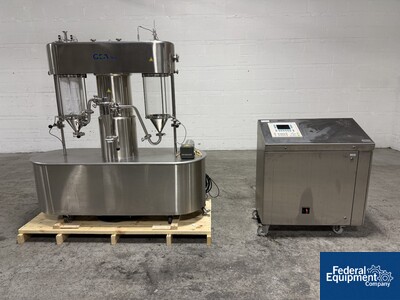
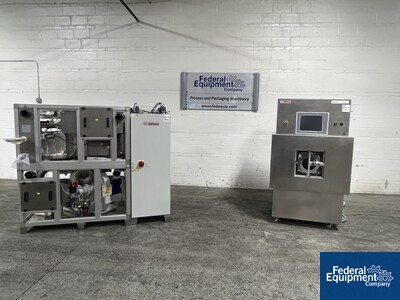
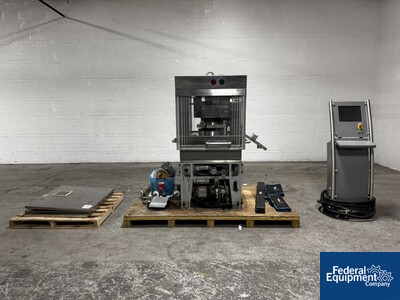
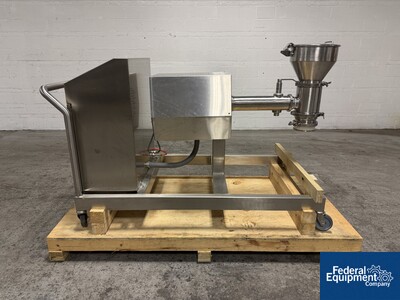
Brand and generic drug makers release equipment when they shut a site or fold products into fewer plants.
Pharmaceutical
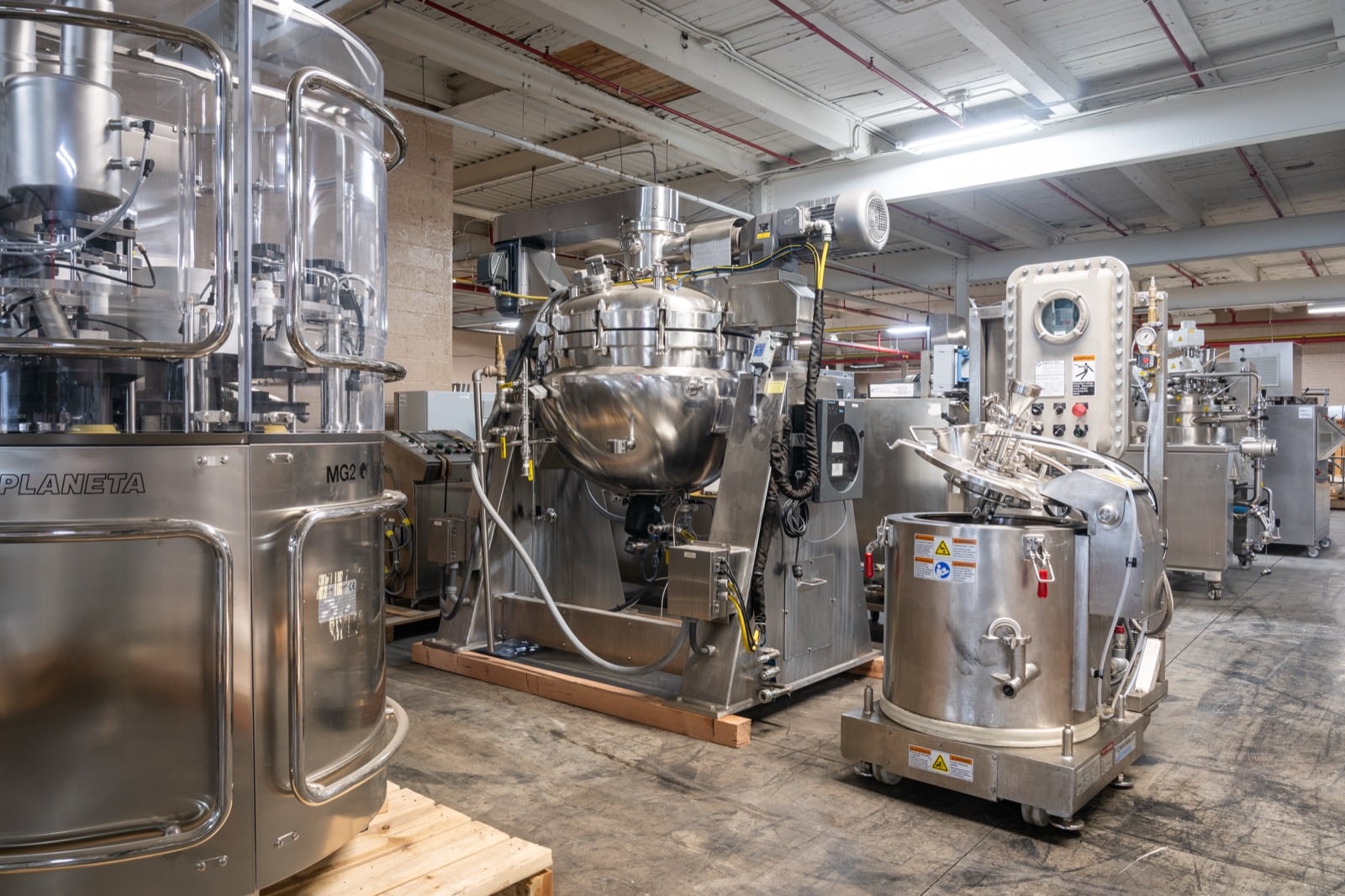
Federal Equipment Company is a leading buyer and seller of used pharmaceutical equipment, most of it kept in more than 200,000 sq ft of climate-controlled space within more than 1 million sq ft of storage in Cleveland, OH. Our inventory covers drug product manufacturing for solid dose, liquid, semi-solid, and sterile products, along with API reactors, filters, centrifuges, and dryers, complete packaging lines, lab instruments, and plant utilities.
What this covers
A pharmaceutical plant is several plants under one roof. The dosage form sets the process train, but API synthesis, packaging, the quality lab, and the utilities behind them each run on equipment of their own.
Each dosage form below has its own process page, and the later sections cover the equipment no single dosage form owns. Supplement makers will find the same tablet and capsule machines arranged around their products on our nutraceutical and supplement equipment page. Bioreactors, chromatography, and other upstream biologics equipment belong on our biotechnology equipment page.
We are a third-generation family business and have bought and sold used process and packaging equipment since 1957. We buy surplus outright or on consignment when a drug plant closes, consolidates, or transfers a product to another site.
Most of it comes out of drug plants that are closing, consolidating, or moving a product to another site.
Brand and generic drug makers release equipment when they shut a site or fold products into fewer plants.
Contract manufacturers and contract packagers release it when a client program ends or a site changes hands, and they are often buyers for the next program.
Development labs and pilot plants are the main source of small-scale equipment.
A product transfer usually works in both directions. The sending site has a line to sell, and the receiving site often needs equipment to run the product it is taking on.
By dosage form
Each dosage form has a page that walks through its process in order. Here is what each kind of plant needs at the level of a buyer, and where to start looking.
Oral solid dose makes up more of our inventory than any other dosage form. Blenders, granulators, fluid beds, mills, tablet presses, capsule fillers, and coating pans all come through regularly, and most buyers shop them by batch size and output first. Oral powders and granules for sachets and stick packs run on the same blending train, then finish on a powder filler or a sachet or stick pack machine instead of a press. Our solid dosage equipment page follows the process from blending through coating.
Syrups, suspensions, and solutions are made in jacketed, agitated compounding vessels and filled on a bottle line. Stainless steel tanks and kettles are the most common equipment class in our pharmaceutical inventory, so vessel size, jacket rating, and interior finish are usually the first questions. Our liquid dosage equipment page covers compounding, filling, and capping.
Topical products need heat, vacuum, and shear in the same vessel, which is why vacuum homogenizer mixers, planetary mixers, and jacketed kettles anchor these lines. Tube fillers and cartoners finish them. Our semi-solid dosage equipment page covers the batch and the fill.
Sterile products are filled under aseptic conditions, so the line is defined by its fillers, isolators, lyophilizers, autoclaves, and component washers, and by the cleanroom around them. Contact us if you do not see the equipment you need. Our aseptic processing equipment page covers the fill-finish train.
Transdermal equipment, such as patch packaging lines, comes through less often.
Tablets, capsules, and powders
Liquids and topicals
Sterile
API and bulk
Packaging
Lab and utilities
API and bulk processing
An active pharmaceutical ingredient is made in chemical process equipment, then separated, washed, and dried to a powder before it reaches a dosage form plant. The API side of a drug company looks more like a fine chemical plant than a tablet room.
Synthesis runs in jacketed reactors. Glass-lined vessels handle acid and halogen chemistry that would attack stainless steel, while 316 stainless steel and Hastelloy reactors cover general and corrosive duty. Sizes run from kilo lab reactor trains to production vessels. Glass-lined agitators, baffles, and valves come through as items of their own, because a glass-lined reactor is usually rebuilt, not replaced.
After the reaction, solids are separated from the mother liquor and dried. A nutsche filter separates the solids in a closed vessel, and an agitated filter-dryer also dries them without opening it. Both are built in 316L stainless steel or Hastelloy. Basket, peeler, and inverting filter centrifuges take the separation step on larger batches, and double cone vacuum dryers finish the powder.
A spray dryer turns a solution into a powder in one pass, from benchtop units used in development to production systems. Closed-cycle systems recirculate nitrogen so an organic solvent can be condensed instead of vented. Evaporators and distillation columns recover solvent elsewhere in the process.
API work goes beyond the warehouse listings. We have sold API pilot plant equipment and a complete pharma chemical API plant at auction. Our chemical process equipment page covers the same vessels as chemical plants use them.
Packaging
Packaging is the one part of a drug plant that every dosage form shares. It is also where buying used saves real lead time, because new blister machines and cartoners are build-to-order equipment, with lead times measured in months.
A solid dose packaging line either forms and seals blisters or counts tablets into bottles that are then capped, induction sealed, and labeled. A cartoner loads the blisters, bottles, or tubes with a leaflet, and case packers and coders finish the line. Vision inspection and checkweighers sit between the steps.
Lines usually leave a closing plant intact. Buying one that way keeps the format parts, controls, and conveyors that were set up to run together. We sell complete packaging lines from the warehouse and at auction, along with the single blister machines and cartoners that fill a gap in an existing line.
Match the line to your pack before you match the machine. Blister card size and cavity depth, bottle range, and carton dimensions decide whether a line fits without new change parts. Our packaging equipment page covers packaging machinery beyond the drug industry.
Supporting the plant
Every batch is tested before release, and a QC lab replaces its instruments on a different cycle from production. Our lab equipment inventory carries analytical balances, HPLC systems, dissolution testers, fume hoods, and tablet hardness testers. Much of it comes out of the same closing sites as the process equipment.
Every drug facility also runs on purified water, steam, chilled water, compressed air, dust collection, and air handling. These are often long-lead items on a new site or an expansion, and they come out of a closing site along with the process equipment. See our utility equipment page and the water treatment and purification category.
Manufacturers
Federal Equipment Company does not manufacture equipment. We buy and sell used machinery from the OEMs that built it, and these are the manufacturers we see most often.
Glatt fluid beds, Fette and Korsch tablet presses, Bosch and IMA capsule fillers, Fitzpatrick and Quadro mills, and Patterson-Kelley twin shell V-blenders recur most often.
Lee Industries kettles, DCI and Feldmeier tanks and jacketed reactors, and Ross planetary mixers and homogenizers make up most of the vessel and mixing side.
Pfaudler and De Dietrich lead the glass-lined side, with Pfaudler RX and RT vessels at small and pilot scale and RS and KC reactors in production. Rosenmund nutsche filters and filter-dryers, Heinkel HF inverting filter centrifuges, and Lightnin and Chemineer agitators appear repeatedly. Spray dryers come mostly from BUCHI, whose B-290 is the common development unit, and GEA Niro.
Uhlmann UPS blister machines and C-series cartoners, Klockner EAS and CP blister machines, Marchesini cartoners, and Videojet coders cover most of the packaging side. In the lab, Mettler Toledo balances recur more than any other brand.
Brand pages
All manufacturers

Services
Equipment is one part of bringing a drug to market. Three services sit alongside it, and one of them comes from an outside partner.
Outside partner
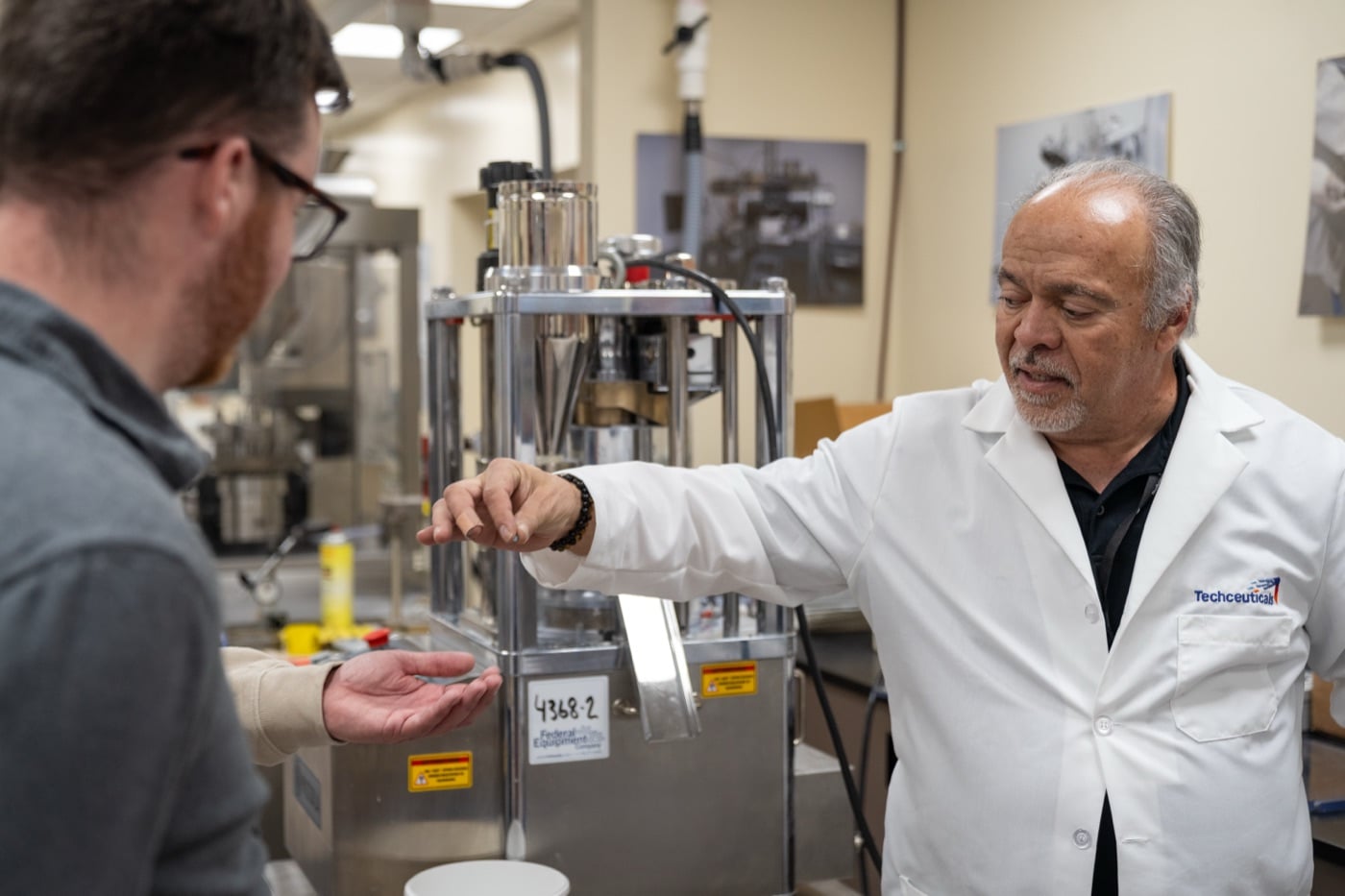
We work with CMC Pharmaceuticals, a drug development firm outside our company, to offer product development services out of the Techceuticals lab in Cleveland, OH. CMC handles formulation, analytical development, and stability studies for tablets, capsules, semi-solids, and injectables, along with process development and scale-up toward commercial manufacture. It suits a company taking a product from early development to pilot batches before it commits to a production line.
Training
Techceuticals, our training division, runs courses in granulation, tablet making, encapsulation, and film coating at its Cleveland, OH lab or at your plant, which helps a team bring an unfamiliar used machine into service.
Parts
PharmParts, our parts division, sells more Fitzmill screens and Comil screens than anything else. It also stocks tooling and spare parts for Fette, Korsch, and Manesty presses and Bosch, IMA, and MG2 capsule fillers, so a used machine is not stranded by one worn part.
Buying used
The machines in a drug facility are ones any process engineer would recognize. What changes is the history a buyer needs to know, the materials, and the paperwork.
The first question about a used pharmaceutical machine is what ran on it. We do our best never to take in equipment exposed to beta-lactam antibiotics such as penicillin and cephalosporins. Where a machine's history calls for it, our decontamination service adds beta-lactam swab testing and bioburden reduction before shipment.
Product-contact surfaces are usually 316 or 316L stainless steel, with Hastelloy and glass lining on API equipment. Our listings state the grade where the nameplate or the records show it. Material certificates travel with a machine only when the original owner kept them, so ask early if your quality system needs them.
Buying the same model series as a machine already on your floor keeps change parts, procedures, and operator training in common. It also gives your quality team a known machine to document instead of a new one.
A new tablet press, blister machine, or production reactor is a build-to-order purchase, with lead times measured in months. Equipment already in our warehouse can ship in days or weeks once inspection and any refurbishment are complete.
Selling surplus
Most of the equipment we buy comes from healthy companies closing a site, consolidating products into fewer plants, or transferring a product elsewhere, not from bankruptcies. We buy outright when a seller needs a firm number and a fixed date to clear the floor. We sell on consignment when the seller would rather share in the result.
Send a list and we will tell you what it is worth and how we would sell it.
Selling starts with an equipment list and photos, including the nameplates. Call 800-652-2466 or email sales@fedequip.com.
Sell your surplus machinesBuying instead? Tell us what you are looking for. You can meet our team at INTERPHEX, CPHI, and AAPS PharmSci 360, and dates are on our trade show schedule.
FAQ
Still have a question? Call 800-652-2466 or email sales@fedequip.com.
Whatever the previous owner kept, which varies by machine. Manuals, drawings, change parts, and maintenance records can travel with equipment from a closing plant, and your sales contact will tell you what we hold. You can inspect a machine in Cleveland, OH, and we run equipment under power where we can. Buyers often send an OEM representative to inspect, and we offer live video tours when a visit is not practical.
You do. Validation belongs to the buyer's quality system, because it proves the machine performs your process in your plant. Our part comes earlier. We inspect equipment at intake, and we can refurbish and test a machine before shipment, replacing wear parts and confirming that drives, controls, and seals function. That work gives your validation team a sound machine to start from, but it is not a substitute for validation.
Used equipment has run in production. Surplus pharmaceutical equipment is anything a plant no longer needs, and some of it never ran at all: spare machines, equipment bought for a project and never installed, and new spare parts. Our listings describe condition machine by machine and say so when a machine is unused. Both go through the same intake inspection.
API manufacturing starts with jacketed reactors in glass-lined steel, 316 stainless steel, or Hastelloy, with agitators sized to the batch. The product is then separated in a nutsche filter, a filter-dryer, or a centrifuge, and dried in a double cone vacuum dryer or a spray dryer. Evaporators and distillation columns handle solvent recovery. We carry all of these, from kilo lab scale to production.
Yes. Blister lines, bottle lines, and cartoning lines often leave a closing plant intact, and we sell them as complete lines from the warehouse and at auction. We also sell the single machines that fill a gap in an existing line. Before you buy, match the line to your pack: blister card size, cavity depth, bottle range, and carton dimensions decide whether it runs without new format parts.
Yes. Drug manufacturers outside the United States buy from us regularly, and we arrange skidding, crating, and freight for export. Some inventory sits in the Netherlands and the United Kingdom, closer to buyers in Europe. Check voltage and frequency early, because a machine built for 60 Hz power may need drive or control changes to run on 50 Hz.
Yes. We run online auctions for plants that are closing or clearing surplus, including pharmaceutical sites. Each auction lists where the equipment sits and how to preview it. Warehouse equipment works differently: you can inspect it in Cleveland, OH, and have it refurbished and tested before it ships. Upcoming and past sales are on our auctions page.
Send us an equipment list with photos, including the nameplates, and the date the site must be clear. We will recommend an outright purchase, consignment, an auction, or a mix, depending on the equipment and the timeline. We handle decommissioning, rigging, and removal, and the cost comes out of the proceeds. Call 800-652-2466 or email sales@fedequip.com to start.
Call 800-652-2466 or email sales@fedequip.com. Inspections in Cleveland, OH by appointment.

Surplus Assets from Rize Home, a World-Renowned Furniture Manufacturer
October 20 - 20, 2026


Denison Pharmaceuticals Turnkey Sale
Turnkey Contract Pharmaceutical Operation Available Immediately. Manufacturing OTC Sprays, Liquids, Creams, Aerosols, Gels, Inhalers & More!

Large-Capacity Jacketed 304 Stainless Steel Storage Tanks
Multiple matching tanks available. Jacketed configurations for temperature control. Specs listed per unit.

Solid Dosage Packaging & End-of-Line Equipment
A broad selection of solid dosage packaging, inspection, and end-of-line equipment from a single site.


Denison Pharmaceuticals Turnkey Sale
Turnkey Contract Pharmaceutical Operation Available Immediately. Manufacturing OTC Sprays, Liquids, Creams, Aerosols, Gels, Inhalers & More!
Large-Capacity Jacketed 304 Stainless Steel Storage Tanks
Multiple matching tanks available. Jacketed configurations for temperature control. Specs listed per unit.
Solid Dosage Packaging & End-of-Line Equipment
A broad selection of solid dosage packaging, inspection, and end-of-line equipment from a single site.


Federal Equipment Company sends out emails with equipment and information curated for our Pharmaceutical, Chemical, Plastics, Packaging, and Food & Beverage customers each week. If you want to sign up to receive any or all of these emails, click the button here.