Closing and consolidating plants
Utility equipment often leaves in the same sale as the process lines it served.
Plant utilities
Federal Equipment Company buys and sells used plant utility equipment for manufacturers from more than 1 million sq ft of storage in Cleveland, OH. Plant utilities are the systems that keep a process running: compressed air, process cooling, steam and heat, vacuum, dust collection, and power. Our inventory covers air compressors and dryers, chillers and cooling towers, boilers and heat exchangers, vacuum pumps and blowers, dust collectors, pumps, valves, and motors, plus forklifts and other plant support equipment.

What this covers
Every process plant runs two kinds of equipment. Process equipment makes the product, and utility equipment supplies the air, water, heat, vacuum, and power that the process needs.
By plant utilities we mean the equipment inside a manufacturer's fence line. We do not sell the bucket trucks, poles, meters, or line equipment that utility companies run in the field. Standby generators and on-site power are covered on our power generation equipment page.
Every process industry runs on the same utilities, each sized to its own load. The same compressors, chillers, and boilers serve the plants on our chemical process equipment, food and beverage equipment, and used pharmaceutical equipment pages.
We are a third-generation family business and have bought and sold used process and packaging equipment since 1957. We buy utility equipment outright or on consignment when a plant closes or consolidates.
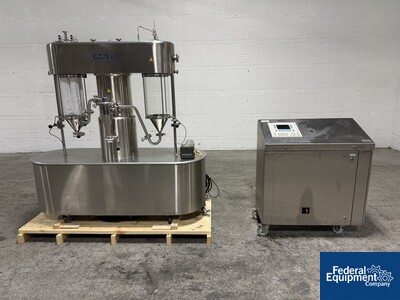
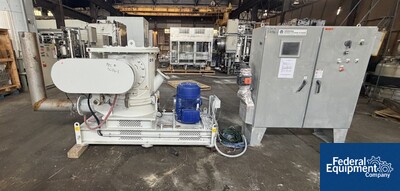
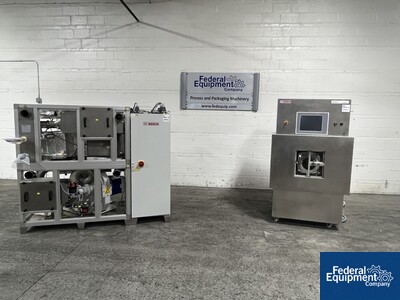
Much of our utility equipment comes out of pharmaceutical, chemical, and other process plants that are closing or consolidating.
Utility equipment often leaves in the same sale as the process lines it served.
Manufacturers with many sites also retire compressors, chillers, pumps, and dust collectors through the investment recovery programs we run for them.
Our online auctions regularly include plant support and facility support equipment alongside the process lines.
A relocation works in both directions. The closing site has utilities to sell, and the new site may need compressors, chillers, and boilers sized for its own load.
By plant system
Plant utilities are easiest to shop by system, because each one is sized to the load it serves. Here is what each system includes and where to start looking.
Compressed air runs the valves, actuators, pneumatic conveying, and packaging machines across a plant. We handle rotary screw, centrifugal, and reciprocating air compressors from 2 to 700 HP, in oil-free and oil-injected designs, along with the refrigerated and desiccant dryers that follow them. Size the compressor to the flow you need at your working pressure, then size the dryer to the same flow.
Chillers and cooling towers carry away the heat a process puts into its cooling water. We have handled air-cooled and water-cooled chillers from fractional-ton units that serve a single machine up to 1,200 tons, and cooling towers from 45 to 2,210 tons. Match a chiller to the leaving water temperature you need, because its capacity falls as the setpoint drops.
Steam heats jacketed vessels, dryers, and cleaning systems. We have handled firetube and watertube package steam boilers from 15 to 800 HP, pure steam generators for pharmaceutical plants, and the hot oil heaters and temperature control units listed under hot oil and water boilers. Shell-and-tube and plate heat exchangers move that heat from one stream to another.
Plant vacuum serves dryers, reactors, filters, solvent recovery, and central house vacuum systems. We handle liquid ring pumps for wet or condensable gas, oil seal and dry vacuum pumps for deeper vacuum, and rotary lobe blowers that boost either one at low pressure. Specify the vacuum level and the pumping speed you need at that level, not only the motor size.
Dust collectors capture dust at the source, at a tablet press, a mill, or a mixer, before it reaches the room. We handle cartridge and bag-type collectors, cyclones, and portable industrial vacuums, along with blowers and fans from 0.5 to 500 HP. Air handling equipment covers air handlers, desiccant dehumidifiers, and HEPA filter units.
Pumps move cooling water, condensate, chemicals, and product through every system above. We handle centrifugal, rotary lobe, gear, diaphragm, peristaltic, and progressive cavity pumps from fractional horsepower to 200 HP. Valves run from sanitary diaphragm and butterfly valves to the rotary airlocks used on dust collectors and pneumatic conveying, and most of the flow meters we see are mass flow meters.
Motors and electrical covers electric motors, variable frequency drives, motor control centers, and transformers, including explosion-proof motors for classified areas. The UPS systems and transfer switches category holds two different machines: a UPS carries controls and other critical loads through a power interruption, and a transfer switch moves the load between utility power and a backup source. Check the voltage and the enclosure rating first, because a motor or drive has to match both the supply and the area it sits in.
Forklifts, drum lifts, cranes, and hoists are plant support equipment, not utilities. Forklifts and material handling covers electric forklifts, pallet jacks, and lift tables, which move raw materials and finished goods around a plant. Drum lifts and bin handlers raise and tip drums and bins to charge powder into process equipment. Cranes and hoists include jib cranes.
Water treatment and purification systems, such as reverse osmosis units and purified water systems, come through less often.
Compressed air and vacuum
Cooling, steam, and heat
Air handling and dust collection
Fluid handling
Power distribution
Plant support and material handling
Terminology
Utility equipment carries a lot of trade names and shorthand. These are the terms that cause the most confusion when buyers search, and what each one means.
The air end is the compression element itself, the rotors or impellers in their housing. A packaged compressor adds the motor, cooler, controls, and enclosure on one base. A dryer is usually a separate machine downstream of the compressor, although some packages build one in.
A chiller cools water or glycol with a refrigeration circuit. A recirculating chiller is the small, self-contained version that serves a lab instrument or a single machine. A temperature control unit heats or cools a water or oil loop to hold a mold or a vessel jacket at setpoint, and Conair sells its units under the Thermolator name.
A package boiler ships as one factory-built unit, with the burner, controls, and connections on a common base. A hot oil heater circulates thermal fluid and makes no steam, so it reaches high temperatures at low pressure. A pure steam generator makes steam from purified water for pharmaceutical processes where steam touches the product.
A liquid ring pump seals its rotor with a ring of liquid, usually water, so it tolerates wet gas and some liquid carryover better than most vacuum pump designs. A dry pump has no liquid in the pumping chamber and is often chosen for solvent recovery, although its fit depends on the pump design, its materials, and the process conditions. A booster is a rotary lobe blower mounted ahead of either one to raise pumping speed once the system is under vacuum.
Fans and centrifugal blowers move large volumes of air at low pressure for ventilation, dust collection, and drying. A rotary lobe blower, often called a Roots blower after the company that introduced the design, is a positive displacement machine used for pneumatic conveying and vacuum boosting.
A baghouse filters dust through long fabric bags and handles heavy dust loads. A cartridge collector packs pleated filter media into a smaller housing. A cyclone spins coarse particles out of the air stream and often sits ahead of a filter to take the first load.
Manufacturers
None of this equipment is built by Federal Equipment Company. The compressors, chillers, pumps, and collectors we handle come from their original manufacturers, and the brands below reach us most often, grouped by system.
Ingersoll Rand Centac centrifugal and SSR rotary screw compressors and Atlas Copco ZT and ZR rotary screw compressors recur most often, followed by Gardner Denver, Sullair, and Quincy. On the vacuum side, Nash CL and XL liquid ring pumps, Busch Cobra dry screw pumps, Edwards and Becker pumps, and Pfeiffer Vacuum WU boosters come through regularly.
Trane RTAA air-cooled and CVHF centrifugal chillers are the large chillers we see most, with Carrier and McQuay close behind, and Neslab is the recirculating chiller brand we see most often. Cooling towers come mostly from Marley, Evapco, and BAC. Cleaver-Brooks is the boiler brand we see most often. Temperature control units come from Conair Group, Mokon, Sterlco, and BUDZAR, and plate heat exchangers mostly from Alfa Laval and Tranter.
Torit and Donaldson Torit are the dust collectors we see most often, along with Camfil collectors and Nilfisk industrial vacuums. Fans and blowers come from New York Blower, Twin City Fan & Blower, and Venti Oelde, and rotary lobe blowers from Roots and Sutorbilt.
Goulds Pumps 3196 and 3415 centrifugal pumps, Grundfos CR vertical pumps, Viking Pump gear pumps, and Durco centrifugal pumps recur most often. Sanitary pumps come most often from Fristam, Tri-Clover, and Waukesha Cherry-Burrell. Micro Motion and Endress + Hauser make most of the flow meters.
Brand pages
All manufacturers



Services
What happens before a unit ships decides how quickly it goes into service at your plant. Three services carry most of that work.
Inspection and testing can be arranged before a unit ships, and we run equipment under power where we can. Before shipment we can test motors, hydrostatically test boilers and heat exchangers, and run leak tests.
We replace seals and wear parts, rebuild compressors, and straighten shafts when a machine needs it. That work is done before the unit ships, not after it reaches your floor.
Cooling towers, large chillers, and package boilers are heavy, oversized loads. We arrange skidding, crating, and freight, including export crating, and we handle decommissioning and removal when we buy equipment out of a plant.
Buying used
Utility equipment is sized to a load and wired to a supply. A used unit has to match your site as well as your duty, and most of the checks happen on the nameplate.
Check voltage, phase, and frequency before anything else. A machine wired for a different voltage, or built for 50 Hz power, may need a new motor, drive, or transformer before it runs in your plant. On large compressors and chillers, check the starter type and control voltage as well.
Rated capacity assumes standard conditions. A compressor delivers less flow at a higher discharge pressure, a chiller loses tons as the leaving water temperature drops, and a cooling tower's capacity depends on the wet bulb temperature at your site. Size the unit against your conditions, not the catalog rating.
Boilers, air receivers, and heat exchangers are pressure equipment, so read the design pressure and the code stamp on the nameplate. Many states require permission or an inspection before a used or relocated boiler runs at a new site. On a chiller, read the refrigerant, because older refrigerants that have been phased out or are being phased down cost more to service.
When a compressor or chiller fails with no spare on site, lead time decides the purchase. Equipment already in our warehouse can ship in days or weeks once inspection and any refurbishment are complete.
Selling surplus
Much of what we buy, utilities included, comes from plant closures and consolidations rather than bankruptcies. When a plant needs one firm number and a set date for its utilities to be gone, we buy them outright. If the owner would prefer a share of what the equipment sells for, we take it on consignment instead.
Utilities can leave with the process lines or on their own. Tell us what is in the plant, and we will come back with a value and a recommended way to sell it.
Begin with a list of the compressors, chillers, boilers, and other units, plus photos of their nameplates. Call 800-652-2466 or email sales@fedequip.com.
Sell your surplus machinesBuying instead? Tell us what you are looking for.
FAQ
Still have a question? Call 800-652-2466 or email sales@fedequip.com.
Utility equipment is the machinery that supplies a manufacturing plant with what its process needs: compressed air, cooling water, steam and heat, vacuum, clean air, and electrical power. It also includes the pumps and valves that move liquids around the plant. Forklifts, drum lifts, and hoists count as plant support equipment, not utilities. Process equipment makes the product, and utility equipment keeps that process supplied.
A plant utility equipment list is usually organized by system. Compressed air covers compressors, dryers, and receivers, and process cooling covers chillers, cooling towers, and circulating pumps. Steam and heat covers boilers, heat exchangers, and temperature control units. Vacuum pumps, dust collectors, blowers, air handlers, motors, drives, and transfer switches round it out. Forklifts and hoists are plant support equipment and can sit on a list of their own. Add water treatment if the process uses purified water.
Sometimes. Compressors come through with their dryers, chillers with their circulating pumps, and liquid ring vacuum pumps as skids with a receiver and heat exchanger. Temperature control and glycol skids arrive as packages too. When a plant closes, its utilities can be sold together. Tell us the system you are building, and we will look for units that match.
Start with the load the equipment has to carry: flow and pressure for compressed air, tons and leaving water temperature for cooling, horsepower and steam pressure for a boiler, or vacuum level and pumping speed for vacuum. Add your voltage, phase, and frequency, the space and access you have, and what the unit connects to. Email it to sales@fedequip.com, or request sourcing help.
Yes. We run equipment under power where we can, and a unit can be inspected and tested before it ships. Before shipment we can test motors, hydrostatically test boilers and heat exchangers, run leak tests, and rebuild compressors. If you cannot travel to Cleveland, OH, we can walk you through a unit on a live video tour, and many buyers also bring in an OEM representative to inspect it.
Often, yes. Many states require permission, an inspection, or both before a used or relocated boiler runs at a new site, and some ask for its last inspection report and National Board registration. Rules vary by state, so call your boiler inspector early. We can hydrostatically test a boiler before it ships and pass along any records the previous owner kept.
Yes, with the process lines or on its own. Send us the list of units with nameplate photos and tell us when the site has to be empty. We will suggest an outright purchase, consignment, an auction, or a mix of the three. We front the cost of decommissioning, rigging, and removal and deduct it from the sale proceeds, so there is no upfront cost to you. Call 800-652-2466 or email sales@fedequip.com.
Call 800-652-2466 or email sales@fedequip.com. Inspections in Cleveland, OH by appointment.

Processing Assets: Blenders, Mixers, Dryers, Mills & Material Handling
November 6 - 12, 2026

Former Assets of a 1,000,000 Sq. Ft. Leading Tire Manufacturer
November 24 - December 3, 2026

A complete, never-commissioned anhydrous ammonia handling system — (4) 120,000-gallon storage bullets, compressor skid, dual-pump skid, and full railcar & truck unloading stations.

Steam Turbine & Heat Recovery System
Well maintained power generation solution available now for redeployment.

Comprehensive Selection of Processing, Inspection, and End-of-Line Equipment
A curated mix of freeze drying, palletizing, weighing, and accumulation systems suitable for biotech, pharma, and general manufacturing.


Processing Assets: Blenders, Mixers, Dryers, Mills & Material Handling
November 6 - 12, 2026
Former Assets of a 1,000,000 Sq. Ft. Leading Tire Manufacturer
November 24 - December 3, 2026
A complete, never-commissioned anhydrous ammonia handling system — (4) 120,000-gallon storage bullets, compressor skid, dual-pump skid, and full railcar & truck unloading stations.
Steam Turbine & Heat Recovery System
Well maintained power generation solution available now for redeployment.
Comprehensive Selection of Processing, Inspection, and End-of-Line Equipment
A curated mix of freeze drying, palletizing, weighing, and accumulation systems suitable for biotech, pharma, and general manufacturing.


Federal Equipment Company sends out emails with equipment and information curated for our Pharmaceutical, Chemical, Plastics, Packaging, and Food & Beverage customers each week. If you want to sign up to receive any or all of these emails, click the button here.