Specialty and fine chemical makers
Specialty and fine chemical makers release reactor trains, filters, and dryers when they fold products into fewer plants or stop making a chemistry.
Chemical
Federal Equipment Company buys and sells used chemical equipment for batch, specialty, and coatings plants, with more than 1 million sq ft of storage in Cleveland, OH. Our inventory runs from reactors, agitators, and glass-lined vessel parts to dispersers, media mills, filter presses, centrifuges, and dryers.
What this covers
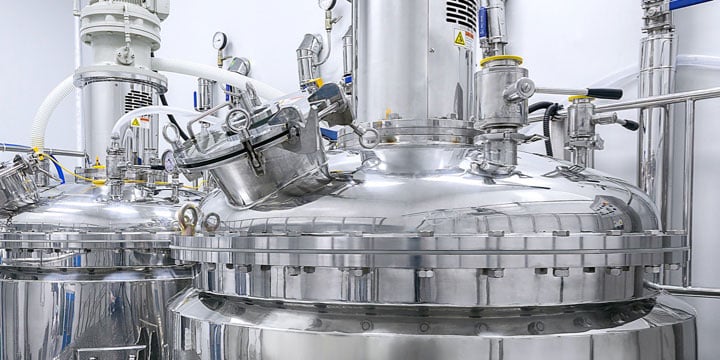
A chemical plant is built around its reactions, then around everything needed to separate, dry, and finish what they make. The equipment we handle centers on batch and semi-batch production, from kilo lab reactors to vessels above 10,000 gallons.
We buy surplus outright or on consignment when a chemical plant closes, consolidates, or changes products, and we sell whole sites at online auction. We are a third-generation family business and have bought and sold used process and packaging equipment since 1957.
Some chemistry has a home on other pages. Rubber, plastics compounding, and resin processing belong on our plastics processing equipment page, and the lines that fill and pack finished chemical products belong on our packaging equipment page. Drug makers run active ingredients through the same reactors and filters, and our used pharmaceutical equipment page covers them in that setting.
Buyers looking for used process equipment beyond chemistry will find the same vessels, mixers, and dryers across our category pages. Steam, cooling water, and compressed air are on our plant utility equipment page.
Most of it comes from healthy companies closing a plant, consolidating products, or leaving a chemistry, not from bankruptcies.
Specialty and fine chemical makers release reactor trains, filters, and dryers when they fold products into fewer plants or stop making a chemistry.
Large chemical companies retire equipment across many plants every year, and some route it through a standing surplus program with us.
Toll and contract manufacturers release equipment when a program ends, and pilot plants and research labs are where kilo lab reactors, small filter-dryers, and bench equipment come from.
Many of the chemical companies that send us surplus from one site also buy from us for another.
By product
The product decides the train. A specialty chemical plant is built around its reactors, a coatings plant around dispersion and milling, and a catalyst or pigment plant around filtration, drying, and calcining.
| What the plant makes | Typical equipment train |
|---|---|
| Specialty and fine chemicals | Jacketed reactors and agitators, receivers and condensers, nutsche filters or centrifuges, vacuum dryers, and solvent recovery |
| Paints, coatings, and inks | Premix tanks, high-speed dispersers, media mills or ball mills, letdown tanks, and filtration |
| Adhesives and sealants | Multi-shaft vacuum mixers, planetary mixers, jacketed kettles, and discharge presses |
| Catalysts, pigments, and inorganic powders | Precipitation tanks, filter presses, dryers, calciners, mills, and air classifiers |
| Soaps, detergents, and cleaning products | Mixing kettles and transfer pumps for liquids; refiners, plodders, and bar presses for bar soap |
A multipurpose batch plant runs many products through the same reactor train, so flexibility matters more than any single size. Buyers usually start with working volume, the internal and jacket ratings, and whether the wetted surfaces are alloy or glass-lined. Toll manufacturers add a second question: how quickly the train can be cleaned and changed over.
Viscosity decides the machine here. A high-speed disperser handles thin and medium batches, multi-shaft and planetary mixers take heavy pastes and sealants, and a media mill sets the final grind. Solvent-borne products also need motors and controls rated for the room's hazardous-area classification, so confirm the rating on every machine you shortlist.
These plants are built for solids. Slurries are dewatered on filter presses, dried, often calcined, and then milled and classified to a particle size. Abrasive and corrosive powders wear equipment hard, so check mill liners, screws, and dryer internals closely.
Liquid cleaners and detergents are blended in agitated kettles and pumped to filling. Bar soap adds refiners, plodders, and presses. We have sold complete soap production and packaging plants at auction.
Batch reaction
Mixing and dispersion
Filtration and separation
Drying and size reduction
Heat transfer and evaporation
Supporting equipment
By unit operation
Whatever the product, a chemical plant runs on a short list of unit operations. Here is what we handle in each, the names buyers search under, and the details that usually decide fit.
Reactions run in jacketed reactors with a top-entry agitator, baffles, and a condenser on the overhead. We handle stainless steel reactors from 1 liter laboratory autoclaves to production vessels above 10,000 gallons, along with Hastelloy C-22 and C-276, Alloy 20, and Duplex vessels for corrosive duty. High-pressure reactors from Parr and Autoclave Engineers, rated in the thousands of psi, cover hydrogenation work, and kilo lab reactor trains cover development.
Glass-lined steel is another option, and the choice between it and an alloy turns on the specific chemical, its concentration, and its temperature. Our used glass-lined reactors page lists the vessels, and the reactor parts that keep them running sell separately: glass-lined agitators, baffles, valves, and reactor tops. Agitator drives, portable mixers, and air-operated agitators for solvent areas are in our agitators category.
Most coatings and inks start by wetting a powder into a liquid, then breaking it down to a fine grind. A high-speed disperser, which many buyers still call a Cowles, does the first step. Multi-shaft mixers add a slow anchor or a second high-speed shaft for heavier batches, and many of them run under vacuum.
Media mills, also sold as bead mills, sand mills, and attritors, finish the grind. Ball and pebble mills do the same work more slowly in a rotating jar or drum, and three roll mills handle the heaviest pastes. Disperser drives run from 0.5 to 250 HP, and Kady mills reach 400 HP, while media mills run from laboratory units to 250 HP production machines.
Solids leave a chemical process through a filter or a centrifuge. Filter presses dewater slurries batch by batch, in recessed chamber and plate-and-frame designs with polypropylene or stainless steel plates from 200 mm to more than 1,500 mm. Where the cake has to stay enclosed, as with toxic or solvent-wet solids, a nutsche filter holds the whole batch in a sealed vessel, and the agitated filter-dryer version washes and dries it in the same shell. We handle them from 0.005 to 6 square meters of filter area in 316L stainless steel, Hastelloy C-22 and C-276, and glass-lined steel.
Centrifuges take continuous duty and larger batches, with basket machines from 12 to 60 inches alongside peeler, pusher, decanter, and disc designs. Pressure filters, rotary vacuum filters, belt filters, and inline basket filters fill in the rest. Distillation columns and wet scrubbers come out of the same plants in stainless steel, glass-lined steel, and fiberglass.
Wet cake from a filter or centrifuge goes next to a dryer. Conoform dryers, also called double cone vacuum dryers, tumble the batch under vacuum and run from 0.5 to 165 cubic feet in 316L stainless steel and glass-lined steel, with a few in Hastelloy C-276 and C-22. Spray dryers turn a solution or slurry into powder in one pass and suit catalysts, pigments, and detergents.
Holoflite dryers, vacuum shelf dryers, rotary vacuum dryers, and drum dryers cover pastes and continuous duty. Calciners and rotary kilns take inorganic powders to high temperature. Pulverizers, jet mills, micropulverizers, and air classifiers then size the product.
In corrosive service, the process decides the exchanger's material. Shell and tube, plate, and spiral heat exchangers cover general duty, while graphite block and tantalum exchangers are common choices for hot acid duty. Coil condensers serve glass and pilot-scale systems.
Evaporators strip solvent and concentrate product. Wiped film and thin film units run from about 1 to more than 400 square feet of heat transfer area, and rotary evaporators cover the lab. Short path and wiped film distillation of botanical extracts is on our hemp and botanical extraction equipment page.
Tanks, pumps, and vacuum pumps serve every step above. We carry jacketed and code-stamped tanks and kettles, centrifugal, gear, and diaphragm pumps, and liquid ring and dry vacuum pumps for solvent service.
Services
A used chemical machine is worth what its wetted surfaces and its pressure boundary are worth. Three questions come first: what ran in it, whether it still holds pressure, and whether the wear parts are sound.
Ask what each machine ran before you shortlist it, because the prior service decides the cleaning, gaskets, and seals it needs. Equipment that ran acids, solvents, or reactive intermediates is resold all the time, and cleaning it and verifying residues for a new service stay with the buyer. Where a machine is moving into food, pharmaceutical, or supplement production, our decontamination service, run with an outside partner, can add beta-lactam swab testing and bioburden reduction with a written report. Those steps cover bioburden and beta-lactam testing only, and do not remove or verify earlier chemical residues or allergens.
Our shop can spark test a glass lining, test a jacket, and run an agitator motor before a vessel ships. Listings give the internal and jacket ratings, and the National Board number where the vessel carries one, so you can check them against your process.
Refurbishment and testing can be arranged before shipment, from seal replacement to motor testing. Glass-lined agitators, baffles, valves, and reactor tops sell as separate items, since a plant with a sound vessel usually needs one part, not a new reactor.
Manufacturers
We are a dealer, not a manufacturer. The machinery below was built by its original manufacturers, and these are the brands we see most often in each of these operations.
| Unit operation | Manufacturers and model series |
|---|---|
| Batch reaction | Glass-lined vessels come mostly from Pfaudler and De Dietrich: Pfaudler's RS and KC series in production sizes and RX and RT at pilot scale, and De Dietrich's CTJ clamped-top reactors. DCI, Precision Stainless, Feldmeier, Lee Industries, and Northland recur most among stainless steel reactors, and Lightnin, Chemineer, and Philadelphia among agitator drives. |
| Mixing, dispersion, and milling | Myers 550 multi-shaft mixers and 775 dispersers, Hockmeyer, Cowles, Morehouse Cowles, and Schold dispersers, and Kady mills. Media mills come from NETZSCH in the LMZ and LME series, Union Process S-series attritors, Dyno-Mill KDL mills, and Eiger Mini MotorMills. Paul O. Abbe recurs most among ball and pebble mills. |
| Filtration and separation | Rosenmund nutsche filters and filter-dryers, Sparkler pressure filters, and JWI and Hoesch filter presses. Centrifuges come from Sharples in its P-series decanters and AS-series super centrifuges, Alfa Laval and Westfalia disc machines, Heinkel HF inverting filter centrifuges, and Tolhurst and Rousselet Robatel basket machines. |
| Drying and size reduction | Patterson-Kelley, Paul O. Abbe, and Gemco double cone vacuum dryers, BUCHI and GEA Niro spray dryers, and Bartlett-Snow calciners. Mikro and Hosokawa micropulverizers and Fluid Energy jet mills handle size reduction. |
| Heat transfer and evaporation | Alfa Laval plate and spiral exchangers, Tranter plate exchangers, SGL Systems and CG Thermal graphite block exchangers, and Atlas Industrial Manufacturing shell and tube units. Wiped film and thin film evaporators come from Pfaudler, Buss-SMS, and Luwa. |
| Supporting equipment | Durco and Goulds Pumps centrifugal pumps, Viking Pump gear pumps, Waukesha Cherry-Burrell rotary lobe pumps, Fristam centrifugal pumps, and Lee Industries and Walker tanks and kettles. |
Brand pages
All manufacturers



Buying used
A chemical buyer asks different questions from a food or drug buyer. Metallurgy, pressure ratings, and the electrical classification matter as much as size and throughput.
Match the material to the specific chemical, its concentration, and its temperature before anything else, because no alloy or lining suits every corrosive service. Stainless steel in 304 or 316L, Hastelloy alloys such as C-22 and C-276, and glass-lined steel each have limits, so check the exact grade against corrosion data for your process. Ask for the nameplate photo or original paperwork to confirm the material on any machine you shortlist.
A jacketed reactor carries two ratings, one for the vessel and one for the jacket, each at its own temperature and often with a full-vacuum rating. Check both against your process. Most of the reactors we handle carry a National Board number, and your jurisdiction's pressure vessel rules decide what is needed before one goes back into service.
Solvent handling areas are usually classified hazardous locations, and the motors, controls, and instruments used there must suit that classification. Explosion-proof construction is one way to get there, and most of the dispersers we handle have it; air-operated agitators avoid electric motors altogether. Compare each rating with your site's class, division or zone, and gas group, and plan for replacements where they differ.
A new production reactor, filter-dryer, or media mill is built to order, and the wait runs to months. Equipment in our Cleveland, OH warehouse can ship in days or weeks once inspection and any refurbishment are complete.
Selling surplus
A plant closure comes with a date, and the sale has to fit it. An outright purchase gives the seller one number and a firm removal schedule. Consignment fits a seller who can wait for the right buyer and would like to share in the result.
Many sellers want a value before they decide. Our Certified Equipment Appraisers provide complete and desktop chemical equipment appraisals, and USPAP-compliant appraisals are available. We appraise only the kinds of equipment we buy and sell, and no sale is required.
Send us the equipment list, photos of each nameplate, and the date the site must be clear. Call 800-652-2466 or email sales@fedequip.com.
Sell your surplus machinesLooking for equipment instead? Send your requirements through our sourcing request form, and we will look across our network.
FAQ
Have a question about a specific machine? Call 800-652-2466 or email sales@fedequip.com.
Yes. Reactors, filters, and dryers are built for corrosive and reactive duty, and a vessel that ran one chemistry is regularly resold for another. Ask what the equipment ran and check the wetted surfaces before you compare machines. Cleaning and residue verification for the new service stay with the buyer. Our decontamination service adds beta-lactam swab testing and bioburden reduction for food or drug use, but it does not remove or verify chemical residues or allergens.
Yes. Glass-lined agitators, baffles, valves, dip pipes, manway covers, and reactor tops sell as items of their own in our reactor parts category, along with agitator shafts. Agitator drives and portable mixers are listed under agitators, and filter press skeletons come through as well. When you are matching a part to an existing reactor, send the vessel model, capacity, and nozzle layout, because one part family is built for several sizes.
You can buy everything that was in one. When a chemical site closes, we sell its reactors, tanks, filters, dryers, and utilities through an online auction or a liquidation sale, usually with the equipment still in place so buyers can preview it. Some liquidation sales offer a complete process line as one package. Our auctions page lists the chemical plant sales coming up and the ones already closed.
They run online, and the equipment normally stays at the plant until it sells. Each auction page lists the location, the bidding dates, and how to arrange a preview, typically by appointment. Lots are described and photographed one by one, so a buyer can bid on a single filter-dryer or on every lot in a reactor train. We have sold entire chemical plants this way, including multi-site sales for large manufacturers and plants in Mexico.
Tell us the closing date as soon as it is set, and send the equipment list with photos of each nameplate and a note on what the plant ran. From that we can price an outright purchase, propose a consignment, or plan an online auction at the site, and many closures use more than one. Decommissioning, rigging, and removal from the plant are ours to manage, and those expenses are deducted from what the equipment brings. Call 800-652-2466 or email sales@fedequip.com.
Most of the chemical process equipment we handle is 304 or 316 stainless steel. We also see vessels in Hastelloy C-22 and C-276, Alloy 20, Duplex, and glass-lined steel, along with graphite and tantalum heat exchangers and PFA- or Halar-lined columns and filters. The right material depends on the specific chemical, its concentration, and its temperature, and no alloy or lining suits every service. Confirm the grade against corrosion data before you buy.
A batch chemical plant starts with jacketed reactors, agitators, and receivers, with condensers and vacuum pumps on the overhead. Solids are separated in filter presses, nutsche filters, or centrifuges and dried in vacuum or spray dryers. Coatings plants add dispersers and media mills, and adhesives plants add multi-shaft and planetary mixers. Heat exchangers, evaporators, columns, tanks, and pumps support every step, along with steam, cooling water, and compressed air.
No. We buy and sell used equipment built by its original manufacturers, including Pfaudler and De Dietrich reactors, Myers and Hockmeyer dispersers, NETZSCH media mills, Rosenmund filter-dryers, and Sharples and Alfa Laval centrifuges. Buying used gets you the same OEM design, often in a model series your plant already runs, without a build-to-order wait. Some of what we sell has never been used.
Call 800-652-2466 or email sales@fedequip.com. Equipment in Cleveland, OH can be inspected by appointment.
Surplus Assets from Rize Home, a World-Renowned Furniture Manufacturer
October 20 - 20, 2026

New Equipment from a Chemical Compound Processing Plant in Torreón, Mexico
October 21 - 21, 2026


A complete, never-commissioned anhydrous ammonia handling system — (4) 120,000-gallon storage bullets, compressor skid, dual-pump skid, and full railcar & truck unloading stations.

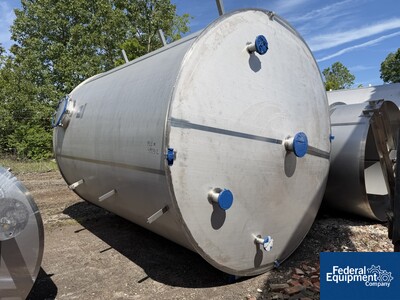
Large-Capacity Jacketed 304 Stainless Steel Storage Tanks
Multiple matching tanks available. Jacketed configurations for temperature control. Specs listed per unit.

Now Available: Toner & Powder Processing Equipment
Liquidation Opportunity – Ideal for Toner, Chemical, Rubber, and Powder Milling Applications

A complete, never-commissioned anhydrous ammonia handling system — (4) 120,000-gallon storage bullets, compressor skid, dual-pump skid, and full railcar & truck unloading stations.
Large-Capacity Jacketed 304 Stainless Steel Storage Tanks
Multiple matching tanks available. Jacketed configurations for temperature control. Specs listed per unit.
Now Available: Toner & Powder Processing Equipment
Liquidation Opportunity – Ideal for Toner, Chemical, Rubber, and Powder Milling Applications


Federal Equipment Company sends out emails with equipment and information curated for our Pharmaceutical, Chemical, Plastics, Packaging, and Food & Beverage customers each week. If you want to sign up to receive any or all of these emails, click the button here.