Step 1: Water treatment
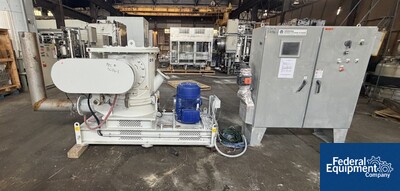
Water is the main ingredient in most drinks, so the line starts with treatment. Carbon filters strip chlorine and taste, softeners and reverse osmosis remove minerals, and UV or fine filtration controls microbes.
Beverage and bottling
Federal Equipment Company buys and sells used beverage processing equipment from more than 1 million sq ft of storage in Cleveland, OH. We handle the machines that take a drink from water treatment and batching through pasteurizing, carbonation, filling, capping, and labeling, along with the brewhouse and cellar tanks that brewers run.

What this covers
A beverage plant is mostly liquid handling: water treatment, tanks, heat exchangers, and pumps ahead of a filling line. Soft drinks, juices, waters, beer, spirits, and nutritional drinks share much of that train. What changes is whether the product is carbonated, how it is preserved, and what container it goes into.
Federal Equipment Company was founded in 1957 and is run today by the third generation of the same family. For a beverage plant with surplus, we can buy it outright, sell it on consignment, or auction the whole site.
Dairy processing, sauces, and dry ingredients are on our food and beverage equipment page. Syrups and oral liquids made under drug rules are on our liquid dosage equipment page, and cartoners, wrappers, and other end-of-line machines for every industry are on our packaging equipment page. Microbial fermentation for biotech and food ingredients is on our fermentation equipment page.
Beverage equipment often reaches us as part of a plant sale. Closures, contract manufacturers clearing a line, and projects that were built and never started all release it. A complete line often sells where it stands and may never appear in our warehouse listings, so ask even when nothing is listed.
Process train
The steps below follow a typical bottled or canned drink. Still waters skip carbonation, juices and teas lean on heat treatment, and a small craft line may combine several steps in one machine. Brewing, distilling, and cleaning are set out after the main train.
Water is the main ingredient in most drinks, so the line starts with treatment. Carbon filters strip chlorine and taste, softeners and reverse osmosis remove minerals, and UV or fine filtration controls microbes.
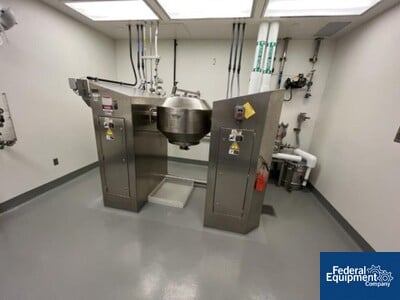
Syrups, concentrates, and powders are dissolved and blended in jacketed or plain stainless steel mix tanks. Powder-heavy drinks need a high shear mixer to wet the powder without lumps. From a nutritional beverage plant, we have handled a 1,600-gallon agitated mix tank, a scraped-surface kettle, and an inline powder-liquid mixer.
Juices, teas, and dairy drinks are heat treated to make them safe and extend shelf life. A high-temperature short-time (HTST) system heats product on a plate or tubular heat exchanger, holds it, and cools it again. Filled cans and bottles can instead pass through a tunnel pasteurizer. We have handled two unused Alfa Laval Steritherm plate heat treatment systems, rated 5,000 and 45,000 kg/hr.
Sodas, sparkling waters, and seltzers take on CO2 after blending. An inline carbonator injects CO2 into the chilled product as it flows to the filler, and cold product holds the gas far better than warm product. We have handled Moravek BC15 and BC30 inline carbonators, along with a dissolved oxygen and CO2 test system for quality control.
PET bottles are often blown on site from preforms, just ahead of the filler. Bought-in bottles are stood upright by an unscrambler and blown out or rinsed before filling. We have handled a Sidel TM 24-24 blow molder with its preform feeder, and both air and orbital bottle rinsers.
Still drinks fill by gravity or volume. Carbonated drinks need a filler designed to control foaming and carbonation loss: counter-pressure filling is common, and some canning systems fill at atmospheric pressure. A triblock rinses, fills, and caps on one frame. We have handled fillers from a 1,200-can-per-hour craft can filler to a never-commissioned aseptic PET filling system rated 900 bottles per minute.
Bottles take screw caps, sport caps, or crowns, and cans take a lid that a seamer rolls onto the body in a double seam. On an aseptic line, a cap sterilizer treats closures before they reach the capper. We have handled Arol rotary and single-chuck cappers, Canco can seamers, and a can filler with its own seamer.
Rotary labelers apply wraparound or spot labels at high speed, and sleeve applicators shrink a printed sleeve onto the container. Cold-filled cans and bottles sweat, so many lines run a warmer before labeling and packing.
Filled containers are packed into cases, trays, or shrink-wrapped bundles, then palletized and stretch wrapped.
A brewery mashes malt in a mash tun, separates the wort, and boils it with hops in the kettle. Cooled wort ferments in cone-bottom fermenters, then conditions and carbonates in bright tanks before packaging. We have handled a 3.5-barrel brewhouse and a 3,100-gallon mash tun, along with the wort tanks, trub tanks, and fermenter bodies of an unused large brewery.
A distillery cooks and ferments a mash, separates the spirit in a pot or column still, then ages, proofs, and bottles it. Much of the plant is tanks, water treatment, and a bottling line. We have sold an unused spirits plant's processing and storage tanks, which ran to 7,000 gallons, along with its packaging line.
Beverage lines are cleaned between products and runs without being taken apart. A CIP skid circulates rinse water, caustic, and sanitizer through tanks, piping, and fillers, often through spray balls in the vessels.
Terminology
Beverage plants, brewers, and equipment builders use different names for the same machines. These come up most.
A triblock combines rinsing, filling, and capping on one frame, with star wheels passing each bottle from one station to the next. Monoblock is the broader term for any combined filler and capper. Both save floor space, but a whole triblock stops when one of its stations does.
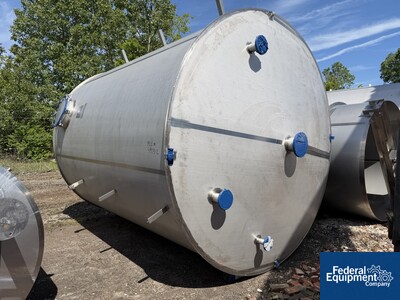
Brewers call a cone-bottom fermenter a unitank when it both ferments and conditions the beer. A bright tank, or brite tank, holds finished beer for carbonation and packaging, so it is built to hold CO2 pressure. Both are jacketed for glycol cooling.
Brewers size equipment in barrels. A US beer barrel is 31 gallons, so a 30-barrel kettle holds about 930 gallons. Imported tanks are usually rated in liters or hectoliters, so convert before comparing listings.
Hot fill puts product into the container hot enough to sanitize it, which suits juices and teas. Cold fill relies on refrigeration, carbonation, preservatives, or a tunnel pasteurizer after filling. Aseptic filling puts sterile product into sterilized containers inside a sterile zone, so the drink is shelf stable without refrigeration.
| Brewhouses and brew kettles | 3.5 barrels to 30 barrels |
|---|---|
| Jacketed cellar tanks | 1,260 to 13,500 gallons |
| Storage tanks | Up to 1,233,000 liters (about 325,000 gallons) |
| Plate heat treatment systems | 5,000 to 45,000 kg/hr |
| Filling | 1,200 cans per hour to 900 bottles per minute |
| Labeling | Up to 800 containers per minute |
These figures show what has passed through our hands, not the limit of what we can find. The largest tanks came from an unused brewery plant we sold at auction.
Rated speeds depend on container size, product, and fill temperature. Judge a used filler or labeler against the container you will run, not the top of its rating.
Services
Three services matter most when you add a used machine to a beverage line.
Condition
We run equipment under power where we can, and live video tours cover what you cannot visit. Many buyers bring the builder's representative to look over a filler or a labeler. Refurbishment, motor testing, and leak testing can be arranged before shipment.
Logistics
A bottling line ships as many pieces: conveyors, the filler and capper, labelers, and the case packer. We arrange skidding, crating, and freight, and equipment can ship in days or weeks once inspection and any refurbishment are complete.
Sourcing
Tell us the drink, the container, the closure, and the speed you need, then request sourcing help. We will look for a complete line or for the separate machines that make one up.
Manufacturers
These are the makers and model series we have handled at each step of a beverage line.
| Step | Manufacturers and model series |
|---|---|
| Brewing and cellar | DME Brewing Services jacketed cone-bottom tanks Quality Tank Solutions jacketed stainless steel cellar tanks in barrel sizes |
| Pasteurizing | Alfa Laval Steritherm plate heat treatment systems |
| Carbonating, filling, and cleaning | Moravek BC15 and BC30 inline carbonators, triblock filler, and CIP system Mitsubishi aseptic filling system and cap sterilizer Fogg 26-head bottle filler and 8-head capper |
| Bottle forming | Sidel TM 24-24 blow molder and preform feeder |
| Capping and seaming | Arol Euro and Eagle cappers Canco can seamers |
| Labeling | Krones Autocol and Canmatic labelers |
Buying used
A beverage line runs fast and runs one container at a time, so check four things before you buy.
Fillers, cappers, and labelers are set up for one container family, through star wheels, timing screws, guides, and capping heads. Check the bottle neck finish or the can diameter and lid size it was built for. Then confirm which change parts come with it, because a machine without them may only run one size.
A filler built for still drinks will lose carbonation and foam. Check that a filler was designed for carbonated product, whether it fills under counter-pressure or is an atmospheric can filler built for it. Bright tanks and carbonated product tanks need a pressure rating, so read the plate before you plan to hold CO2 in them.
Builders rate each machine in bottles per minute or per hour on a given container, and the slowest one sets the output of the whole line. Rinsers, fillers, cappers, and labelers from different sources need matched speeds and conveyor transfers. Plan the accumulation between them before combining machines.
Beverage plants draw heavily on chilled water, compressed air, CO2, and steam or hot water for CIP. Check what each machine needs against what your site has. For the chillers, air compressors, and boilers that feed a bottling hall, see our plant utility equipment page.
Selling surplus
A working bottling or canning line often brings more sold as a unit than broken up. Send us the layout, what each line ran, and when the building must be empty, and we will recommend how to sell it.
Our auction calendar lists past sales. They include an unused brewery plant, an unused spirits plant, a beverage contract manufacturer, a nutritional beverage plant, and a never-commissioned PET bottling line. Groups of surplus also sell through our liquidations.
Send an equipment list, nameplate photos, the containers each line ran, and the date the site must be clear. Call 800-652-2466 or email sales@fedequip.com.
Sell your equipmentBuying instead? Tell us what you are looking for.
FAQ
Still have a question? Call 800-652-2466 or email sales@fedequip.com.
Yes, and it often comes to us in plant sales. From an unused brewery, we have sold fermenter bodies, wort and trub tanks, and storage tanks. We have also sold a 3.5-barrel brewhouse, as well as the tanks and bottling line of an unused spirits plant. We have also handled a brew kettle, a mash tun, and jacketed cone-bottom tanks. Ask about stills or anything else you do not see listed.
A typical line runs water treatment, mix tanks, and a heat treatment or carbonation step ahead of the packaging end. That end starts with a bottle unscrambler or a blow molder, then a rinser, filler, and capper, often combined in a triblock. Labelers, case packers, and a palletizer finish the line. Still waters and juices skip carbonation.
A fermenter, usually cone-bottomed, is where yeast turns wort into beer, and the cone lets the brewer draw off yeast and sediment. A bright tank holds the finished, clarified beer while it carbonates and waits for packaging, so it must hold pressure. A unitank is a cone-bottom vessel that does both jobs.
Usually not. A gravity or volumetric filler built for still drinks lets the gas escape and the product foam. Carbonated drinks need filling equipment designed to control foaming and carbonation loss. Counter-pressure fillers, which pressurize the bottle or can with CO2 before filling, are common, and some canning systems fill carbonated drinks at atmospheric pressure. Chilled product helps either way. Check the filler type before you buy for a carbonated line.
A high-temperature short-time (HTST) system heats a drink on a plate or tubular heat exchanger, holds it at temperature in a holding tube, and cools it again. Juices, teas, and dairy drinks are often treated this way before filling. Most systems have a regeneration section that uses the outgoing product to warm the incoming product, which saves energy.
Yes. We have run online auctions for brewery, spirits, and beverage plants, including whole plants that were built and never started. Most sales let buyers walk the line by appointment before bidding. Past brewery, spirits, and bottling sales are in the archive on our auctions page.
Start with a list of the lines and machines and nameplate photos of each major unit. Tell us what each line filled, the container sizes, the rated speed, and whether it still runs. Include the date the plant must be empty. We front rigging and removal and deduct it from the sale proceeds, so nothing is due up front.
Call 800-652-2466 or email sales@fedequip.com. You can inspect equipment in Cleveland, OH by appointment.

Processing Assets: Blenders, Mixers, Dryers, Mills & Material Handling
November 6 - 12, 2026

Former Assets of a 1,000,000 Sq. Ft. Leading Tire Manufacturer
November 24 - December 3, 2026

A complete, never-commissioned anhydrous ammonia handling system — (4) 120,000-gallon storage bullets, compressor skid, dual-pump skid, and full railcar & truck unloading stations.

Major Chemical Plant Liquidation – Glass-Lined & Stainless Reactors, Blenders, Tanks & More
Unlock a rare opportunity to acquire high-quality processing equipment from a recently decommissioned chemical facility.

Sale of All Remaining Chemical Mining Related Items Located at Draslovka Mining Site
SPX Air Cooler, Ammonia Equipment, pumps, valves, meters and more! Currently located in Mexico.

Processing Assets: Blenders, Mixers, Dryers, Mills & Material Handling
November 6 - 12, 2026
Former Assets of a 1,000,000 Sq. Ft. Leading Tire Manufacturer
November 24 - December 3, 2026
A complete, never-commissioned anhydrous ammonia handling system — (4) 120,000-gallon storage bullets, compressor skid, dual-pump skid, and full railcar & truck unloading stations.
Major Chemical Plant Liquidation – Glass-Lined & Stainless Reactors, Blenders, Tanks & More
Unlock a rare opportunity to acquire high-quality processing equipment from a recently decommissioned chemical facility.
Sale of All Remaining Chemical Mining Related Items Located at Draslovka Mining Site
SPX Air Cooler, Ammonia Equipment, pumps, valves, meters and more! Currently located in Mexico.


Federal Equipment Company sends out emails with equipment and information curated for our Pharmaceutical, Chemical, Plastics, Packaging, and Food & Beverage customers each week. If you want to sign up to receive any or all of these emails, click the button here.