What equipment does an industrial fermentation plant need?
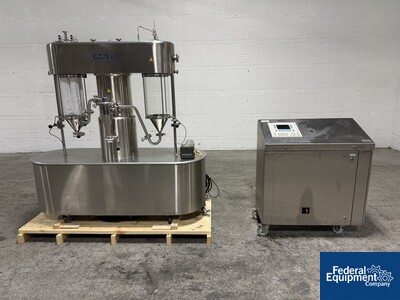
Most plants need media tanks and a sterilizer, an incubator shaker and seed fermenters, and one or more production fermenters with clean-in-place and steam supply. Harvest uses disc stack separators, decanters, or filter presses. Recovery may add ultrafiltration or evaporators, and a spray dryer or freeze dryer turns the product into powder. Boilers, chillers, and air compressors run behind every step.
Can a brewery fermentation tank be used for microbial fermentation?
Usually not for a pure-culture process. Brewery tanks are built to be cleaned and sanitized, and many are not rated to be steam sterilized under pressure or held under vacuum. A stainless steel microbial fermenter is a sealed pressure vessel with sterile air filtration, aseptic sample ports, and seals that keep contaminants out. Some food fermentations tolerate sanitized vessels, so the organism and the process decide.
What equipment does precision fermentation use?
Much the same as an enzyme plant: seed and production fermenters, separators to remove the cells, membranes or evaporators to concentrate the protein, and a spray dryer. Engineered yeast, fungi, or bacteria make the target protein, and the organism sets the oxygen and cooling the fermenters must supply. Food-grade plants also need sanitary design and food-safety records.
What size seed fermenter do I need?
Work backward from the production vessel. An inoculum is commonly 5% to 10% of the next vessel's working volume, so a fermenter with a 3,000-liter working volume needs roughly 150 to 300 liters of inoculum. That sets the seed vessel's working volume, and the seed vessel may need a smaller stage of its own. The organism's growth rate, your process data, and how many transfers you want decide the final sizes.
What should I check on a used disc stack separator for fermentation broth?
Start with the bowl: whether it is a self-cleaning or solid-bowl design, its rated speed, and its inspection and overhaul history. Corrosion or erosion in a high-speed bowl is a safety issue. Then check the discs, seals, and spindle bearings, and whether the machine was built for clean-in-place. Finally, compare its rated throughput with the solids content of your broth.
Do you sell fermenters that produced antibiotics?
We do our best never to bring in equipment that ran penicillin, cephalosporins, or other beta-lactam antibiotics, several of which are made by fermentation. Trace residue can cause severe allergic reactions, so that equipment needs dedicated facilities. When a fermenter's history is unclear, ask what it ran. Our decontamination partner can test swabs for penicillin G and ampicillin residue.
Do you buy equipment from closing fermentation plants?
Yes. We buy equipment outright or sell it on consignment, and for a whole site we can run an online auction with our partners. A whole-site sale can also include the plant's labs, boilers, and generators. Removal costs nothing up front, because we pay for it and deduct it from the sale proceeds.
What should I send to sell fermentation equipment?
Start with an equipment list and nameplate photos, including each vessel's ratings and National Board number. Tell us the working volumes, the organisms that ran, whether the controls and software come with each system, and when the site must be clear. For a whole plant, a layout or P&ID helps us decide whether to sell lines intact or as separate machines.